

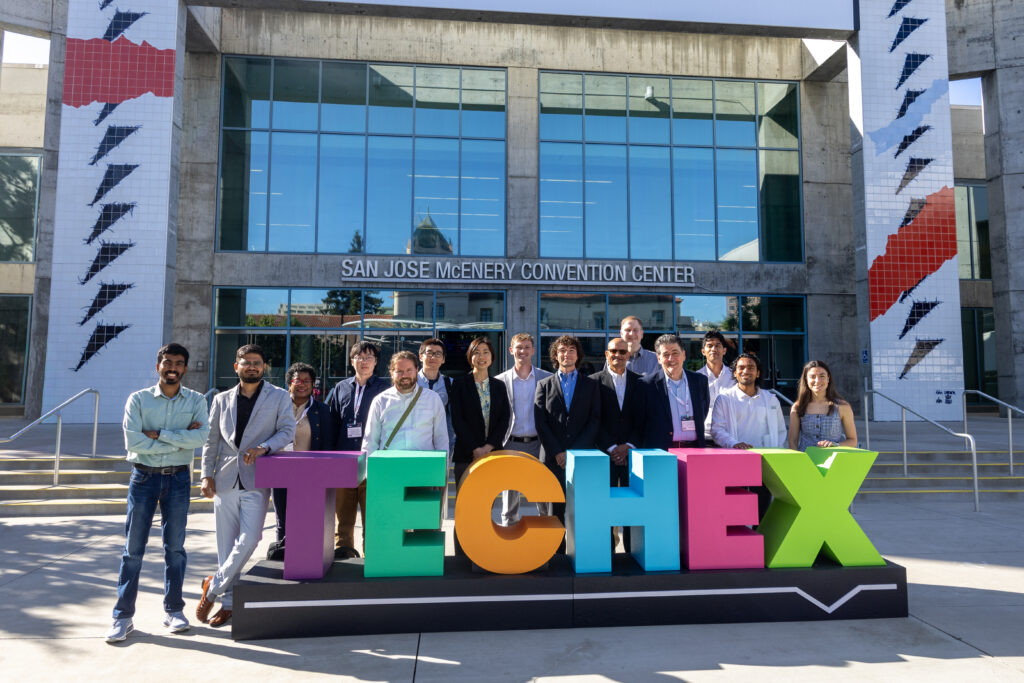
In May, a cohort of enterprise innovators participated in an NSF I-Corps regional course centered on emerging technologies in artificial intelligence, cybersecurity, IoT, edge computing, data centers, and digital transformation. As part of the program, teams traveled to San Jose, California, to attend TechEx North America, a leading technology conference that brings together innovators, industry leaders, and decision-makers to explore the latest developments shaping the future of enterprise technology.
Held May 18-19, TechEx North America welcomed more than 8,000 attendees, 250 speakers, and 250 exhibitors. The event provided participants with an opportunity to engage directly with customers, industry experts, and potential partners while validating market needs and refining their commercialization strategies.
The course was led by instructors Tom Murdock of the University at Buffalo and Bob Waggoner of West Virginia University, who guided teams through customer discovery and market exploration activities throughout the program.
Through interviews with potential customers and industry stakeholders at TechEx North America, participants tested assumptions, uncovered unmet needs, and gained a deeper understanding of their target markets.
FlowGrid founder Raj Tadipatri said the experience reinforced the importance of observing customer behavior rather than relying solely on stated preferences.
“One of the biggest lessons was the importance of focusing on what customers actually do, not what they say they might do. The interviews highlighted how much fragmentation and manual coordination still exist in highly regulated, timesensitive environments. Hearing those real experiences brought forward pain points that aren’t visible from the outside.“
The insights gained through customer discovery helped teams refine their value propositions and identify opportunities for future development. The following teams successfully completed the course:
BetahWorx, LLC: BetahWorx is developing cybersecurity technology that strengthens how organizations protect sensitive information and manage digital access. Their approach creates security credentials dynamically rather than relying on long-term stored credentials, helping organizations reduce risk across cloud-based and enterprise systems.
CatOps Analytics: CatOps Analytics is developing software that creates comprehensive digital models of complex systems. By bringing together data from design, manufacturing, operations, and maintenance, the platform helps organizations better understand system performance, evaluate potential changes, and make more informed decisions.
FlowGrid: FlowGrid is developing a software platform that helps hospitals and blood centers reduce waste by identifying blood units that are most at risk of expiring before use. Using predictive modeling and operational inventory data, the platform aims to improve inventory management and increase the availability of lifesaving blood products.
Iron Ridge Cyber Inc.: Iron Ridge Cyber is developing QuickChain, a cybersecurity platform that helps organizations identify software vulnerabilities and streamline compliance requirements. By automating security documentation and risk analysis, the technology helps development teams address security concerns more efficiently throughout the software development process.
Melody: Melody is building a market intelligence platform that helps companies identify customer needs and product opportunities by analyzing online reviews, discussions, and feedback. The platform transforms large volumes of customer conversations into actionable insights that can support product development and business decision-making.
PMFlow: PMFlow is developing an AI-powered platform that connects construction management software tools and synchronizes project data across systems. The technology helps construction teams reduce manual data entry, improve visibility across projects, and make better-informed operational decisions.
Upright: Upright is developing an autonomous warehouse inspection system that uses robotics and computer vision to detect structural damage in storage racks. Operating during off-hours, the technology helps warehouse operators identify safety concerns while minimizing disruptions to daily operations.
VisualOps AI: VisualOps AI is building a computer vision platform that helps manufacturers identify product defects and quality issues in real time. Designed for manufacturers without dedicated data science teams, the system translates complex production data into clear, actionable insights that support quality control and operational efficiency.
NFSIL: NFSIL is developing artificial intelligence technology that enables devices to learn from very small amounts of data while using minimal computing resources. The approach is designed for edge devices and could support more efficient AI applications in environments where processing power and energy consumption are limited.
The customer discovery process also helped teams refine their commercialization strategies and better identify their target customers.
Evan Lubinsky, founder of Iron Ridge Cyber, reflected on the conversations held at TechEx that validated assumptions the team had been testing and helped sharpen its go-to-market approach.
“We learned that most startups are trying to build so fast that they do not have time to worry about compliance or cybersecurity. They would rather forego it now and deal with the consequences later if they have a breach. This was something we already suspected, but the conversations at TechEx confirmed it. As a result, we shifted our strategy to focus on companies that have moved beyond the ‘build fast’ stage and are now addressing the security and compliance challenges that come with growth, particularly those entering government or highly regulated markets.”
Through customer discovery, industry engagement, and hands-on market validation, participants gained valuable insights to help advance their technologies from innovation to impact.